


What is the Forschungszulage? The full overview for 2026
Germany's most important R&D incentive — explained simply: what it is, who gets it, and how much is in it for you. Including the new figures from the official 2026 evaluation report.
Definition
The Forschungszulage reimburses up to 35% of your R&D costs — even retroactively, with a statutory legal entitlement.
No basic research required
You don't need scientific research. Software development, product improvements, and process optimization count just as much — as long as there's technical uncertainty behind them.
Statutory legal entitlement
No competition, no selection process. If your project meets the criteria, it must be funded — regardless of the budget situation.
Even without profit
You don't have to pay taxes to benefit. If the funding exceeds your tax liability, the rest is paid out in cash — giving pre-profit startups a real liquidity boost.
Who is it worth it for?
Is your industry covered? Most likely, yes.
What matters isn't the industry sector, but whether you carry out technical development involving innovation. This is how applications are distributed nationwide:
And no matter how big you are:
86%of applicants are SMEs, 18% of them start-ups in their first five years
- Software, IT & AI
- Machinery & Plant Engineering
- Electronics, Optics & Electrical Engineering
- Metal, Chemistry & Materials
- MedTech, Health & Life Sciences
- Vehicle Construction & Mobility
and many more – Your industry not listed? Get a free check in 15 minutes →
Requirements
What you need to qualify
Four formal requirements — all met? Then you are generally entitled to the Forschungszulage.
All requirements in detail →
- Tax liability in Germany
- Subject to unlimited or limited tax liability.
- No company in difficulty
- No undertaking in difficulty under EU state aid law, no insolvency, no outstanding EU recovery claim.
- Taxable legal form
- GmbH, AG, KG, OHG, sole proprietors, freelancers, farmers and foresters, opting partnerships — all qualify.
- EEA for contract research
- The contractor must be based in the EEA.
Facts & Figures
Low bureaucracy, eligible for retroactive projects, and attractive funding rates
Three figures that help you decide quickly whether this is even relevant for you.
Funding rate SMEs
on the eligible assessment base (25% for large companies)
Retroactive
you can still submit R&D expenses from past years
Maximum
funding per year and company — corporate groups are consolidated
How much would it be for you?
Move the sliders for a ballpark figure. You'll get the final number in the initial consultation — this one is enough to decide whether it's worth pursuing.
Initial consultation
In 15 minutes, we'll find out together whether the Forschungszulage is a fit for you
What we'll clarify in the call:
- Whether your development projects qualify
- What funding amount is realistic, including retroactively
- All open questions, from process to terms
Choose a slot that works for you. 15 minutes over video.
Calendar not loading? Pick a time in a new tab
Real-world examples
Sounds too good to be true? Here are funded projects
From AI to hardware to SaaS — these are the kinds of projects funded by the Forschungszulage.
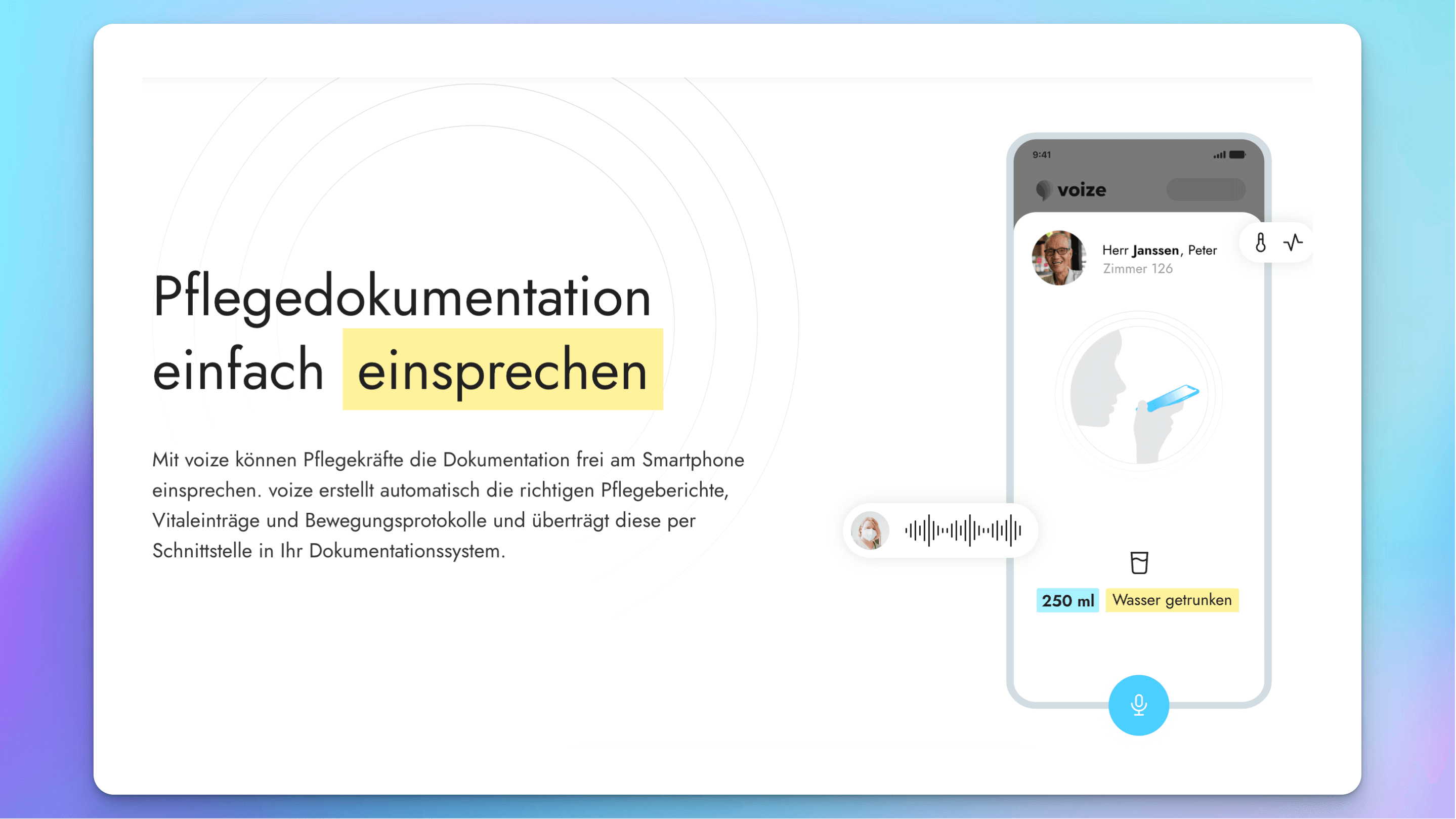
AI speech recognition for care documentation. A novel NLP architecture with genuine technical uncertainty around recognition accuracy.
Officially reviewed: the Forschungszulage works
On 10 September 2026, the German federal government submitted the statutory evaluation report on the Forschungszulage Act to the Bundestag (Bundestag document 21/7999). For the first time, the effect was measured causally — against control groups of companies that did not apply. The figures that matter for your decision:
The catch: for two out of three projects, the BSFZ requests additional information, usually about novelty and technical risk. And only 49% of companies with a certificate have actually claimed the money from the tax office so far.
Read all 7 answers from the evaluation report →More than a grant: what the allowance sets in motion inside companies
The report does not just measure whether money flows, but what companies do with it.
Own funds grow faster than the funding
Funded companies raise their own R&D funds by 20% and public funds by 16.8%. The report calls this crowding-in: the allowance does not displace a company's own money, it pulls more in.Report p. 128Evaluation report · BT-Drs. 21/7999 · p. 128 (original German): „Gemäß den kausalen Analysen auf Basis der FuE-Erhebung bzw. des MIP in Verbindung mit den BSFZ-Daten hat die Forschungszulage zu einer Steigerung sowohl der Eigen- als auch der staatlichen Mittel für FuE geführt (FuE-Erhebung: um 20,0 % bzw. 16,8 %; MIP: um rd. 28 % und 19 %, je nach Kontrollgruppe). Der stärkere Zuwachs der Eigenmittel gegenüber der staatlichen Mittel spricht für ein Crowding-in.“
1 : 3.90
Every euro of Forschungszulage stands for €3.90 in claimed R&D costs. That describes the co-financing, not the causal effect, as the report itself points out.Report p. 128Evaluation report · BT-Drs. 21/7999 · p. 128 (original German): „Das entspricht einem rechnerischen Verhältnis von 1 : 3,9. Das bedeutet: Mit jedem Euro Steuergutschrift wurden 3,90 Euro an qualifizierten FuE-Kosten abgerechnet. Dieser Wert dokumentiert die kofinanzierende Natur des Instruments, darf jedoch nicht mit der kausalen Additionalität verwechselt werden.“
€210,000 more internal R&D per company
That is how much funded companies spend additionally on internal R&D on average. Across all applicants this adds up to €1.6 billion, i.e. one euro of additional R&D per euro of funding.Report p. 124Evaluation report · BT-Drs. 21/7999 · p. 124 (original German): „Der durchschnittliche absolute Effekt der DiD-Regressionen auf Basis des MIP sowie der BSFZ-Daten ergibt für die geförderten Unternehmen eine Ausweitung der internen FuE-Aufwendungen von 210.000 Euro. Multipliziert man diesen Betrag mit den bisher 7.819 Unternehmen mit einer beantragten Forschungszulage ergibt das zusätzliche, interne FuE-Aufwendungen von rund 1,6 Mrd. Euro. In Relation zur bisher ausbezahlten Forschungszulage von ebenfalls rund 1,6 Mrd. Euro entspricht dies einem Euro zusätzlicher interner FuE je Förder-Euro.“
The team becomes more qualified
The share of university graduates in funded companies rises by more than 3 percentage points. The report calls this upskilling: the allowance lifts not just headcount but qualification.Report p. 112Evaluation report · BT-Drs. 21/7999 · p. 112 (original German): „Dieser steigt in den Unternehmen mit einem Antrag bei der BSFZ, gegenüber den vormals FuE-aktiven nach Antragstellung um mehr als 3 Prozentpunkte. Da im Schätzsample der Anteil der Hochschulabsolventen im Median bei 25 % (Mittel: 35 %) liegt entspricht das einem relativen Plus von rund 12,5 % (8,9 %) bezogen auf den Median (Mittelwert). Die ist ein deutlicher Hinweis auf „Upskilling“ und die Förderung geht mit einer qualifikatorischen Aufwertung der Belegschaft einher.“
All original quotes from the sources (4)
Verbatim quotes, in the original language, from the linked primary sources. Each reference links to the original.
„Gemäß den kausalen Analysen auf Basis der FuE-Erhebung bzw. des MIP in Verbindung mit den BSFZ-Daten hat die Forschungszulage zu einer Steigerung sowohl der Eigen- als auch der staatlichen Mittel für FuE geführt (FuE-Erhebung: um 20,0 % bzw. 16,8 %; MIP: um rd. 28 % und 19 %, je nach Kontrollgruppe). Der stärkere Zuwachs der Eigenmittel gegenüber der staatlichen Mittel spricht für ein Crowding-in.“
p. 128„Das entspricht einem rechnerischen Verhältnis von 1 : 3,9. Das bedeutet: Mit jedem Euro Steuergutschrift wurden 3,90 Euro an qualifizierten FuE-Kosten abgerechnet. Dieser Wert dokumentiert die kofinanzierende Natur des Instruments, darf jedoch nicht mit der kausalen Additionalität verwechselt werden.“
p. 128„Der durchschnittliche absolute Effekt der DiD-Regressionen auf Basis des MIP sowie der BSFZ-Daten ergibt für die geförderten Unternehmen eine Ausweitung der internen FuE-Aufwendungen von 210.000 Euro. Multipliziert man diesen Betrag mit den bisher 7.819 Unternehmen mit einer beantragten Forschungszulage ergibt das zusätzliche, interne FuE-Aufwendungen von rund 1,6 Mrd. Euro. In Relation zur bisher ausbezahlten Forschungszulage von ebenfalls rund 1,6 Mrd. Euro entspricht dies einem Euro zusätzlicher interner FuE je Förder-Euro.“
p. 124„Dieser steigt in den Unternehmen mit einem Antrag bei der BSFZ, gegenüber den vormals FuE-aktiven nach Antragstellung um mehr als 3 Prozentpunkte. Da im Schätzsample der Anteil der Hochschulabsolventen im Median bei 25 % (Mittel: 35 %) liegt entspricht das einem relativen Plus von rund 12,5 % (8,9 %) bezogen auf den Median (Mittelwert). Die ist ein deutlicher Hinweis auf „Upskilling“ und die Förderung geht mit einer qualifikatorischen Aufwertung der Belegschaft einher.“
p. 112
Go deeper: our guides
Four concise guides on the Forschungszulage — from eligibility to the concrete calculation.
Requirements
Who is eligible, which projects count, and what the BSFZ actually checks.
Calculation
Which costs are eligible, how the funding amount is composed, and what ends up in your account.
Application
Step by step through the BSFZ portal and tax office — deadlines and common pitfalls included.
FZulG law
The Forschungszulagengesetz at a glance: paragraphs, definitions, and the legal entitlement.
Your path
Should I do it myself or hire a consultancy?
Both work. Which path fits depends on time, risk, and scale. According to the evaluation report, around two thirds of all applications are filed with external consultants. Here are the four most important differences.
Internal time investment
Under 5 hours spread across 4 calls
40–80 hours over several weeks
Success rate
95 % (our own applications, last 4 years)
79% across all applicants (2026 evaluation report)
BSFZ requests for additional information
Reasoning drawn from interviews with your tech team, targeted at novelty and technical risk
For two out of three projects, usually about novelty and technical risk
Cost structure
100% success-based, due only after the tax office has paid out
No fee, but your hours instead
FAQ
What newcomers ask first
Contact
Sounds relevant? Let's take a quick look.
A 15-minute initial consultation is enough to clarify whether this is a fit for you at all — and at what scale. Free and without obligation.